Annual Conference 2026
The 53rd AAAS conference will take place from November 5-7, 2026, at the University of Education, Upper Austria and the University of the Diocese of Linz. It is titled “Critical Media Analysis, Participatory Cultures, and New Textualities: American Studies through a Digital Lens”.
This conference investigates the rise of digital technologies and ongoing AI-development that create new challenges for American Studies, including the need for critical engagement with novel forms of textual production, dissemination, and reception.
Critical media analysis, media education, and digital literacies form an integral part of our new curricula. Through digital periodical research and digital archives, scholars recuperate previously neglected voices, adding to a more inclusive and accessible representation of the United States. Participatory cultures, adaptative revisioning, and transmedia storytelling not only challenge but also expand literary and cultural canon formations. Post-cinema art, live-streaming poetry slams, educational podcasts, computer games, digital art, memes, webcomics, poetry films, remixes, spin-offs, and fanart etc. invite us to study new forms of cultural and literary expressions as a creative response to narratives in print culture. Through digitally connected action, people mobilize online for social change and act as a vital counterforce to traditional, hegemonic, techno-capitalist trajectories and knowledge regimes.
In short, we explore American Studies through a digital lens, examining the multisensory quality of multimodal works as well as their creative, historical, social, political, and educational relationships to formative narratives and epistemologies.
CfP (closed): please regularly come back to this website https://ph-ooe.at/aaas-conference-2026 to find out to more about the program.
Arrival
Fees & Registration
Conference Fees: AAAS 2026, Linz
Please register for the conferende in two steps.
Here you can register: Registration / Anmeldung
Available until October 26, 2026
Hotels and Accommodation
The following list of hotels is a small selection of what is available in Linz. As the conference will be hosted in two different locations, please make sure you bear in mind that cheaper options that are slightly further away from the city center might prove harder to get to in the evening. Public transport is generally good in Linz and buses run (although on a slightly more limited timetable) till late.
Please check the conference website for detailed information on how to get to the conference venues. It will take you about 20 minutes from the Hauptplatz (main city square) to either of the two venues, if you choose to walk. Bus stops are located approx. 5-10 min. walking distance from the two venues.
Please note: The Conference Dinner will be at Hotel Kolping, which is close to Linz Cathedral and the main shopping district along Landstraße.
Name | €-€€ | Link |
Arcotel Nike **** | €€ | |
Art Inn (Self Check-in) | € | |
B&B Hotel Linz | €€ | |
City Hotel **** & Dom Hotel | €€ | |
Hotel Schwarzer Bär **** | €€ | |
Hotel Kolping *** | €€ | |
Austria Classic Hotel Wolfinger Linz | €€ | |
Park Inn by Radisson **** | €€ | |
Leonardo Hotel Boutique Linz | €€ | |
Jugendgästehaus | € | |
Motel One Linz Hauptplatz | €€ | |
Mamma Muh (Self check-in) | € | |
Hotel Wilder Mann Linz ** | € |
Preliminary Program
Keynote Dr. Wyn Kelley
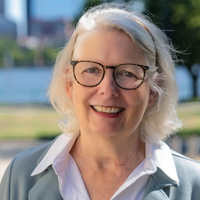
Reading in Circles: Digital Humanities and American Studies in Dynamic Partnership
Abstract:
My career as literary scholar, which began in traditional lecture halls, brought me unexpectedly over time into new circles. In collaborating on projects in the digital humanities, I learned about participatory culture, fluid-text theory, digital annotation, and quantitative textual analysis. These wide-ranging concepts have informed my various efforts in scholarship and pedagogy, but one thing has remained constant: the presence of Herman Melville, whose novels, stories, and poems attract readers to digital spaces but also to physical classrooms, museums and other public venues. At these sites, we sit in virtual or physical circles: sharing expertise, applying new methods, reading together. In a talk that is as much narrative as theoretical exploration, I chart how American Studies and Digital Humanities can co-operate in the same circles. This AAAS conference is an ideal place to recognize their partnership and its implications.
Bio:
For most of her career, Wyn Kelley has taught American literature at MIT, where she is a Senior Lecturer Emerita. She has published books and articles on Herman Melville, including Reading in a Participatory Culture: Remixing Moby-Dick in the English Classroom, co-authored with media scholar Henry Jenkins, and more recently A New Companion to Herman Melvilleco-edited with Christopher Ohge. She has served as Associate Editor of Leviathan: A Journal of Melville Studies, and as Associate Director of the Melville Electronic Library. As a founding member of the Melville Society Cultural Project, she has also worked with the New Bedford Whaling Museum on programming and community engagement. More recently she was an NEH Fellow at the American Antiquarian Society, researching Frances E. W. Harper for an essay published in American Literary History.
Roundtable
Roundtable Discussion
“Critical Media Analysis and the Crisis of Representation
in the Era of Post-Truth”
Moderator: Markus Oppolzer (University of Salzburg)
Devon Anderson (University of Innsbruck)
Svenja Englemann-Kewitz (Heinrich-Heine University Düsseldorf)
Manuela Naveau (University of the Arts, Linz)
Heidemarie Petermichl (Körner Gymnasium, Linz)
Christian Quendler (University of Innsbruck)
Devon Anderson, BA MA MS
Devon Anderson is a doctoral candidate and university assistant with the Department of American Studies at the University of Innsbruck. She holds degrees in English literature from Brown University and the University of California, Berkeley, as well as a degree in education from Hunter College, CUNY. Devon's fifteen years of teaching experience include courses taught at Brown University, the University of Salzburg, the American International School Salzburg, La Guardia Community College, and the New York City Department of Education. In addition to pedagogy, Devon's academic research interests include queer theory, affect theory, narrative theory, and critical race studies.
Dr. Svenja Englemann-Kewitz
Svenja Engelmann-Kewitz is Postdoctoral Researcher in American Studies at Heinrich-Heine-University Düsseldorf. She holds a PhD from Dresden University of Technology with a thesis on Contemporary Ecocritical Imaginaries of the Circumpolar North. Her current research and teaching investigate intersections of digital and environmental humanities in the context of imagining alternative futures in U.S.-American literature and culture.
Univ. Prof. Dr. Manuela Naveau
Manuela Naveau is a university professor, an independent curator and an art-based researcher. For 18 years she headed Ars Electronica Export, and since 2023 she has been directing the department Interface Cultures and initiated the Critical Data Research Group at the University of Arts Linz. Her research and writing have focused on participation, interaction, and collaborative practices in Media Art, Digital Art and Critical Data, resulting in numerous academic publications, essays, and curatorial texts.
Assoc. Prof. Dr. Markus Oppolzer
Markus Oppolzer is an Associate Professor of Teaching English as a Foreign Language and Literary Studies at the Department of English and American Studies at the University of Salzburg. His research interests are visual narrative media, multiliteracies, auto/biography and teaching literatures and cultures in secondary schools.
Mag. a. Heidi Petermichl
Heidi J. Petermichl, * 1973, studied „Anglistik und Amerikanistik“ at the University of Salzburg; ERASMUS-program (one semester) at the University of Leeds, participation in the ASPUT-program at the University of Salt Lake City, Utah; Graduate Assistant at the University of Minneapolis, Minnesota, ECHA-diploma; ALM “Train the Trainer”-Certificate (Estes Park, Colorado), teaches at Körnergymnasium, Linz.
Univ. Prof. Dr. Christian Quendler
Christian Quendler is Professor of American Literature, Film and Media and Chair of the American Studies Department at the University of Innsbruck. He is the author of three monographs, among them The Camera-Eye Metaphor in Cinema (Routledge 2017), and principal investigator of the research project “Delocating Mountains: Cinematic Landscapes of the Alpine Model.”
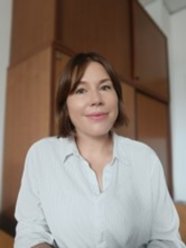
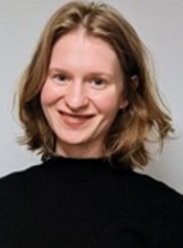

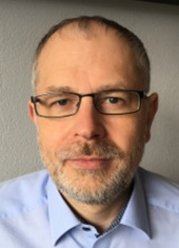


Endnote Dr. Christopher Ohge
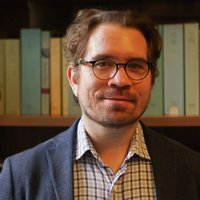
BartlbAI and the ‘mettlesome poet': Literary Codes, Archives and Close Reading in the Digital Age
Abstract:
This closing keynote begins with a provocation based on Melville’s "Bartleby, the Scrivener," exploring the relevance of this tale in the AI era. By reading "BartlebAI" alongside contemporary technological anxieties, I offer a broader reflection on what humanists should understand about artificial intelligence, what algorithms cannot parse about humanistic inquiry, and an exploration of Melville’s appreciation of the "mettlesome poet”. Moving beyond that literary text, I review some of my recent projects on anti-slavery archives and spatial hypertext (applied to folklore) to advocate for the irreplaceable value of archival recovery, depth-work, material analysis, and creative play in a world saturated with techno-utopian distractions. Ultimately, Melville’s final utterance in "Bartleby"—humanity—remains the only prompt the machine cannot adequately process.
Bio
Christopher Ohge is Senior Lecturer in Digital Approaches to Literature at the School of Advanced Study, University of London. He also serves as the General Editor of Melville’s Marginalia Online and Co-Director of the Melville Electronic Library. He is the author of several publications and he was the co-editor, with Kristen Schuster, of New Directions in Digital Textual Studies: Book History, Scholarly Editing and Curation in Conversation (Bloomsbury, 2026) (https://www.bloomsbury.com/uk/new-directions-in-digital-textual-studies-9781350406780/). His forthcoming book is on Herman Melville and the Digital Humanities, which is due to be published by Bloomsbury in 2027.
Side Events
Workshops/Panels (in progress)
Organizing committee & contact
We look forward to welcoming you in Linz!
The 53rd AAAS conference is organized by Melissa Kennedy, Edith Kreutner, and Martina Pfeiler at the University of Education Upper Austria (PHOÖ) and the Private University of Education of the Diocese of Linz (PHDL)
For more information about the AAAS and for membership applications, please visit https://aaas.at.
Contact us at aaas@ph-ooe.at
Prof. Dr. Martina Pfeiler (AAAS President), PHOÖ / University of Vienna
University of Education Upper Austria
Kaplanhofstraße 40
A-4020 Linz
Dr. Edith Kreutner (AAAS Secretary), PHDL
Private Pädagogische Hochschule der Diözese Linz
Salesianumweg 3
A-4020 Linz
Event
November 5th–7th, 2026
Pädagogische Hochschule Oberösterreich
Kaplanhofstraße 40
A-4020 Linz
Private Pädagogische Hochschule
der Diözese Linz
Salesianumweg 3, A-4020 Linz
Co-Organizer